User experience and development project
MindHealth VR companion app
This project was developed as part of the innovative Mind Health VR project — that aimed at reshaping workplace wellbeing through immersive technology.
At its core, the goal was to design a scalable companion app that seamlessly integrates with Mind Health’s Virtual Reality (VR) experiences. The emphasis on scalability was critical, as the platform is built to evolve — with planned integrations for wearable devices and AI-driven analytics.
What truly sets this project apart is its forward-thinking approach: the ability to cross-collect data from VR sessions and biometric wearables, then leverage AI to generate actionable mental health insights. These insights can be relayed back to HR teams, helping companies proactively address issues like absenteeism, burnout, and disengagement before they escalate.
This entry highlights my strategic planning, senior-level oversight, and hands-on involvement — from roadmap creation and UX/UI to web/app development and testing.
More technical or design details available on request.


Roadmap & Task Overview
This process was developed collaboratively between me and the tech lead. Together, we created a structured roadmap for the app’s development, which ran in parallel with some aspects of the VR build. The plan included full integration with the VR experience, login and authentication systems, database design, AI integration, and more.
My involvement spanned across many phases of the project. Some of my key contributions included:- App functionality discovery and strategy workshop (Facilitation and participation)
-
Facilitating and participating in app functionality discovery and strategy workshops
-
API testing and integration on the VR side (C# coding, build, and testing), to allow for data sharing between both devices
-
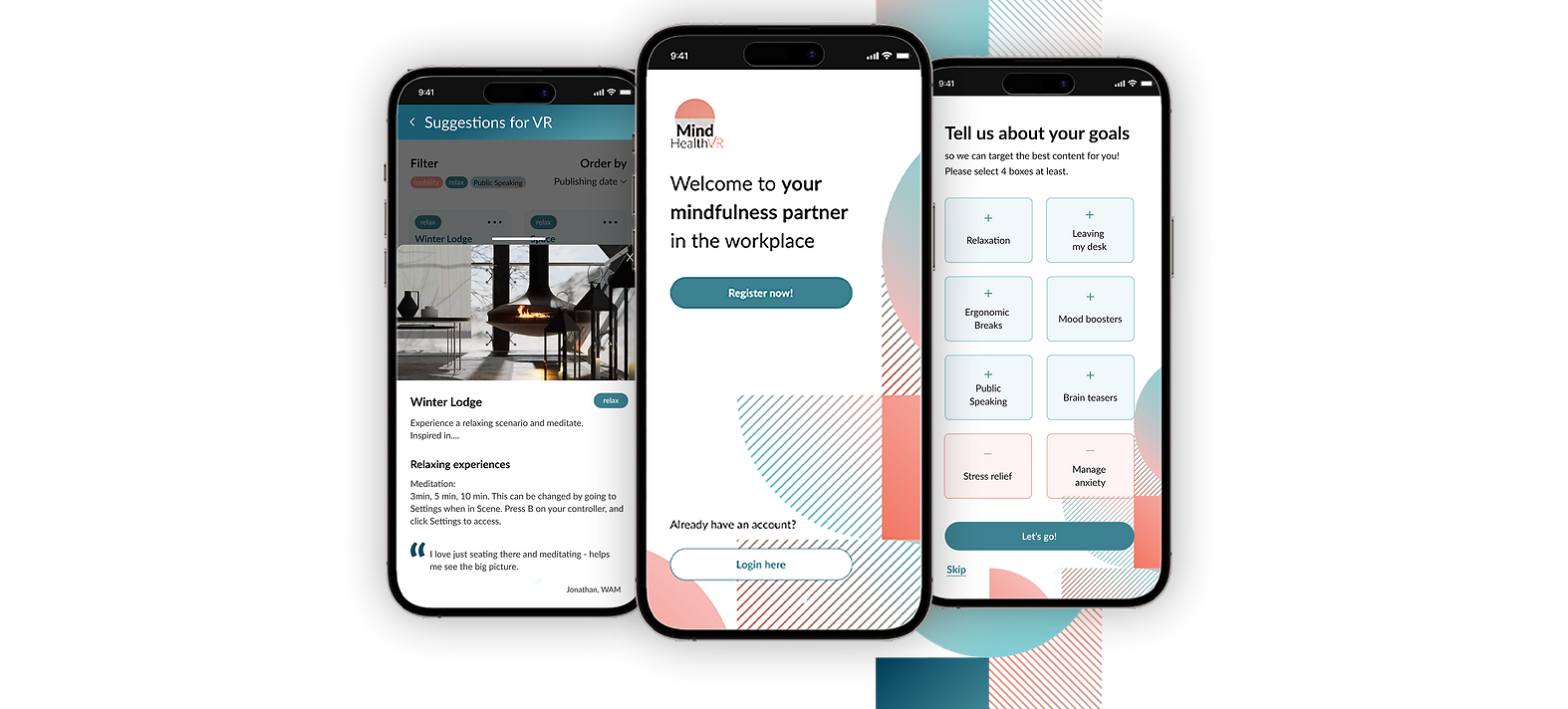
Designing UX and UI for both the mobile and VR apps, including user dashboard and HR admin area (Images below)
-
Supporting mobile app build and testing processes
One other noteworthy feature was the integration of a PowerPoint upload system via the companion app, allowing users to rehearse their presentations within VR. This aimed to boost presentation skills, confidence, and reduce public speaking anxiety.

Web development and database integration
I started by designing the full experience in Figma, building out prototypes and running light hallway testing, keeping feedback loops tight due to time and budget constraints. Once the senior developer set up the core codebase for logins and database security, I stepped in to support the front-end build. With the help of GitHub Copilot, I contributed clean, efficient UI logic and interactions with Node.J, freeing up the rest of the team to focus on deeper back-end tasks. My design expertise ensured the UI was implemented with high fidelity and minimal iteration.
To manage content at scale, I integrated Contentful as our headless CMS—handling API setup, connecting it to the UI, and enabling articles to be pulled in dynamically with a scalable structure. This allowed non-dev contributors to manage content without needing code changes.
Finally, I wrapped the product into a native app using CapacitorJS, running tests via Xcode and refining the mobile layout to ensure the UI translated smoothly across platforms. I also maintained an open testing route for real-time QA and design tweaks during build.
The result: a polished, production-ready app delivered quickly, with design quality well above expectations for the time frame, thanks to tight design-dev collaboration and smart use of AI-assisted development.
